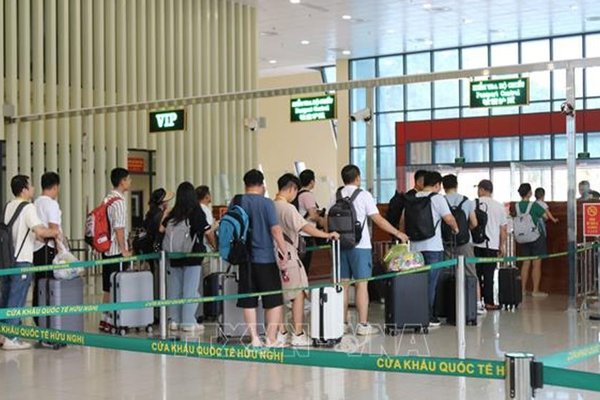
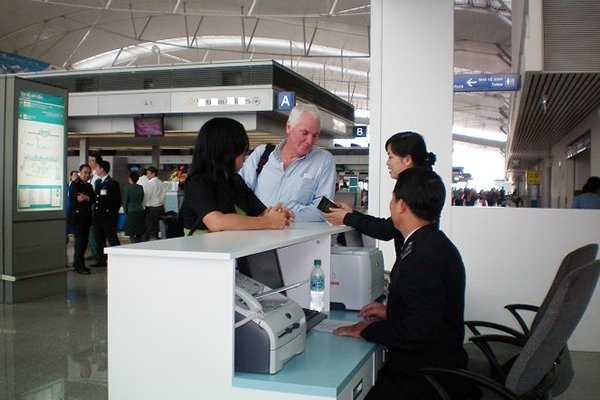
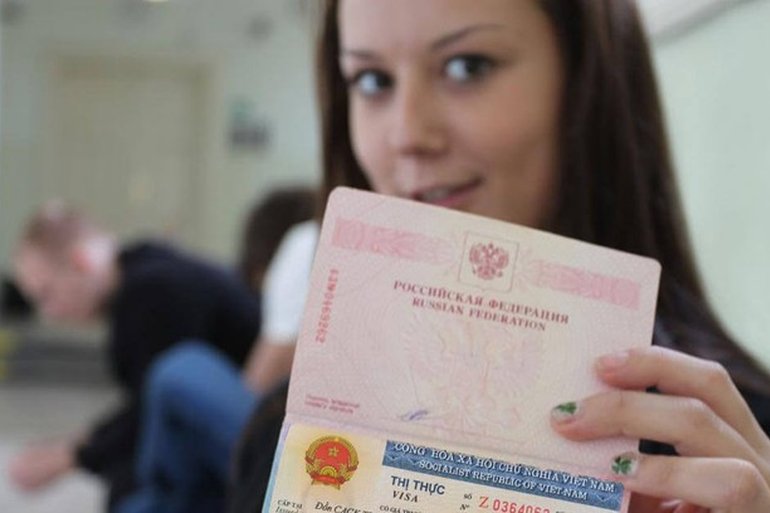
 Photo: baochinhphu.vn
Simplifying Exit and Entry Procedures to Facilitate Trade and Tourism
Visa policy, cultural diplomacy, and the promotion of trade and economic exchange were among the key issues that drew questions from National Assembly deputies to Minister of Foreign Affairs Bùi Thanh Sơn.
Continuing the question-and-answer session at the 31st meeting of the National Assembly Standing Committee, on the afternoon of March 18, Minister of Foreign Affairs Bùi Thanh Sơn took the floor to answer questions from National Assembly deputies.
Regarding visa policy and the promotion of trade, Minister Bùi Thanh Sơn said that many countries around the world are highly interested in Vietnam and regard it as a safe destination with many beautiful landscapes and attractions. In the context of greater openness and deeper international integration, not only are foreign visitors coming to Vietnam, but Vietnamese citizens also have growing demand to travel abroad and seek opportunities for production and business development.
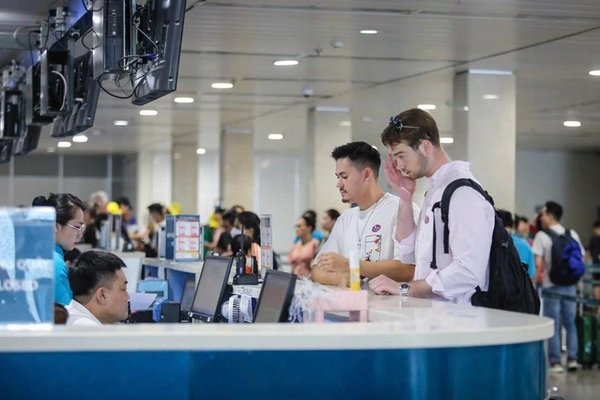
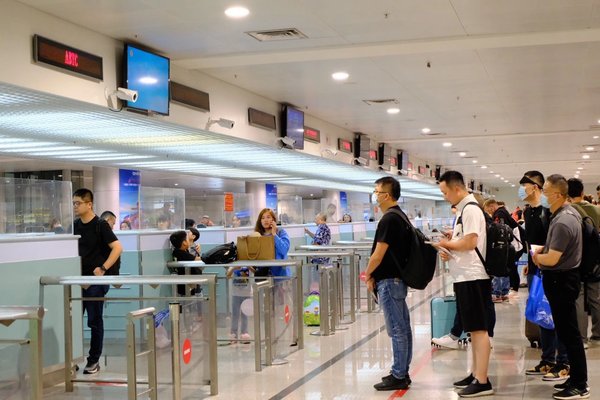
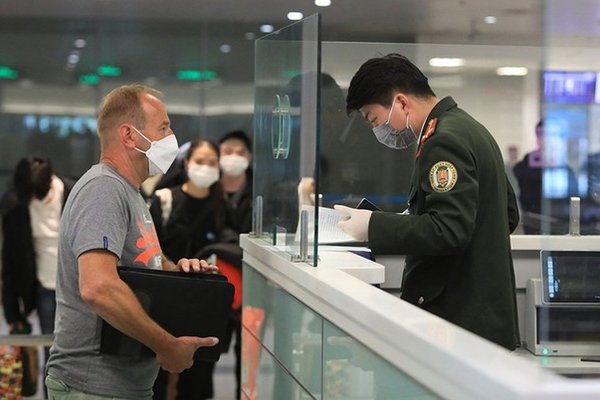
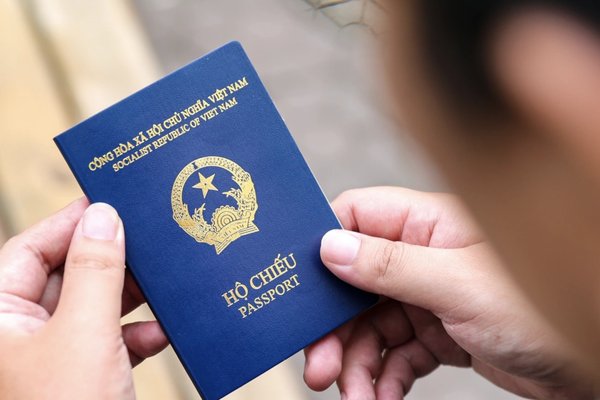
For this reason, the Ministry of Foreign Affairs has been coordinating with relevant authorities to simplify exit and entry procedures. Most recently, the National Assembly passed a law amending and supplementing a number of articles of the Law on Exit and Entry. In addition, Vietnam currently grants unilateral visa exemption to 13 countries, which are key tourism markets that send large numbers of visitors to Vietnam.
The Ministry of Foreign Affairs has also negotiated bilateral visa exemption arrangements with 15 countries in order to make exit and entry activities more open and convenient.
Regarding border planning and the implementation of related agreements, Vietnam currently has 25 provinces sharing land borders with neighboring countries. In recent years, the Prime Minister has issued a master plan for upgrading Vietnam’s border gates with neighboring partners, in line with the 2017 Planning Law and the national master plan for the 2021–2030 period approved by the National Assembly. These important results will help facilitate economic diplomacy as well as cross-border economic cooperation between Vietnam and neighboring countries.
“An important achievement of border delimitation and marker planting with neighboring countries is that it has secured a firm and lasting border. More importantly, however, we must make full use of a peaceful and friendly border for shared development and mutual benefit. Therefore, the Ministry of Foreign Affairs is working quickly with ministries, sectors, and localities to develop plans for all border gates and coordinate with partners to upgrade them in order to ensure the smooth movement of goods and people between countries,” Minister Bùi Thanh Sơn said.
The Minister also noted that, in implementing the foreign policy line of independence, self-reliance, multilateralization, and diversification of relations, as well as being a friend, a trusted partner, and an active, proactive, and responsible member of the international community, Vietnam currently maintains diplomatic relations with 193 United Nations member states and has comprehensive strategic partnerships with 7 countries. In establishing and upgrading relations with partners, Vietnam places importance on building political trust in order to further promote trade, investment, science and technology, and education and training cooperation in a deeper and more comprehensive manner.
Responding to questions from deputies on cultural diplomacy, Minister Bùi Thanh Sơn affirmed that the cultural diplomacy strategy for the 2021–2030 period had been drafted by the Ministry of Foreign Affairs and issued by the Government. This is a continuation and further development of the cultural diplomacy strategy for the 2011–2020 period, while also introducing several new elements.
To implement the cultural diplomacy strategy, the Minister said that cultural diplomacy activities not only help enhance the promotion of Vietnam’s image, people, and culture to the world, but also enable Vietnam to absorb the cultural values and achievements of the international community through exchanges.
With that spirit, the Ministry of Foreign Affairs has proactively cooperated and coordinated with international organizations, especially the United Nations Educational, Scientific and Cultural Organization (UNESCO). At present, UNESCO has 7 most important mechanisms, and Vietnam has been elected by the international community to 5 of its most important positions, including the World Heritage Committee. This serves as an interconnected cooperation mechanism through which Vietnam can work with international partners to enhance cultural cooperation.
Recent Posts
From 1 July 2026, Vietnam Adds Two New Visa Types for Foreigners
What is a Vietnam loose-leaf / sticker visa? When is it issued?
Processing Time for Visa Exemption Certificates Reduced to 1 Working Day